
As America approaches its 250th anniversary in 2026, the milestone offers more than a celebration of independence. It creates an opportunity to reflect on the voices, sacrifices, and contributions that have shaped the nation over two and a half centuries — including the women whose work helped build Arizona and the American West.
Arizona’s story cannot be told without women. Long before Arizona became a state in 1912, Indigenous women across tribal nations preserved language, culture, agriculture, art, and community traditions through generations of change and hardship. Native women played essential roles as leaders, educators, healers, and protectors of cultural identity throughout the Southwest. Even after the passage of the 19th Amendment, many Native American women in Arizona were still denied full voting rights until 1948 due to state-level restrictions.
During Arizona’s territorial days in the late 1800s, women helped establish schools, businesses, newspapers, ranches, and civic organizations across rugged frontier communities. Women often managed households and businesses while helping shape the social foundations of growing towns throughout the territory.
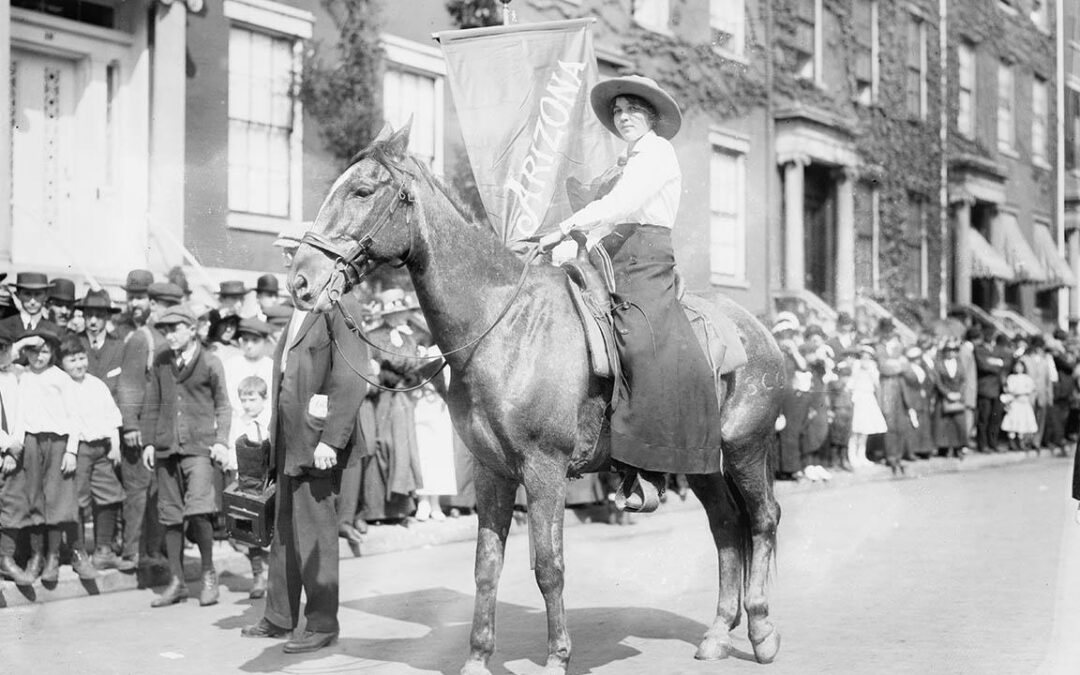
One of the most influential early advocates was Josephine Brawley Hughes, who founded Arizona’s first suffrage organization in the 1890s and fought to include women’s voting rights in Arizona’s early constitutional efforts. Later, leaders like Frances Willard Munds and Pauline O’Neill organized campaigns across Arizona, building alliances with miners, ranchers, labor groups, and rural communities to secure voting rights for women. Their efforts led Arizona to adopt women’s suffrage in 1912 — eight years before the 19th Amendment granted women nationwide voting rights.
Arizona women also became political trailblazers early in the state’s history. Rachel Berry became one of the first women elected to a state legislature in the United States when she won a seat in the Arizona House of Representatives in 1914. She focused on education, child welfare, and infrastructure, helping shape Arizona’s early government.
Women in Arizona also influenced journalism, business, and public advocacy. Angela Hutchinson Hammer became a pioneering newspaper publisher who used her publications to advocate for women’s suffrage and expose corruption while helping strengthen civic engagement throughout Arizona communities.
Over the decades, Arizona women continued breaking barriers in education, healthcare, entrepreneurship, the arts, science, and public service. Women helped expand access to higher education at institutions like the University of Arizona and later became leaders in aerospace, engineering, environmental conservation, and tribal governance throughout the state.
Today, women across Arizona continue shaping the future through small business ownership, nonprofit leadership, public office, healthcare, education, media, and community advocacy. In communities like Prescott, women are leading organizations, supporting local economies, mentoring future generations, creating art, and building spaces centered around connection and purpose.
America’s 250th anniversary is not only about looking back at famous moments in history. It is also about recognizing the women whose names may not appear in textbooks but whose contributions transformed communities across Arizona and the nation. Teachers, ranchers, artists, entrepreneurs, mothers, activists, volunteers, and business owners all became part of the larger American story.
The celebration of 250 years offers a reminder that freedom and opportunity have expanded because generations of women continued pushing forward — often in difficult circumstances and without recognition. Their persistence helped create new opportunities not only for themselves, but for future generations.
As America enters its next chapter, women will continue helping define what leadership, innovation, resilience, and community look like for the next 250 years.