

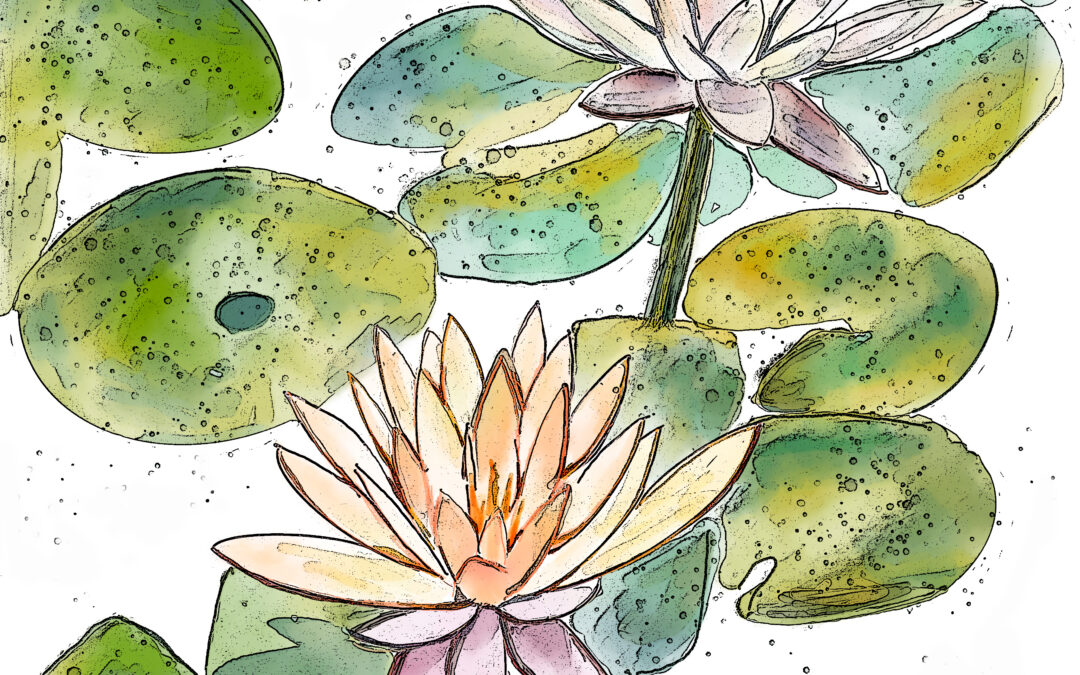
Japanese gardens are exquisitely choreographed to evoke awareness for intentional living
By Lyndsey Redmann
Stillness and ease are at the heart of a Japanese garden, evoking an awareness of the present moment.
Strolling through secret pathways of raked white sand and wooden bridges over koi ponds offer a place of pure tranquility in a Japanese garden.
There is a brilliant concept in the Japanese culture, mono no aware. It is a term that encapsulates the fleeting beauty of the natural world. The falling autumn leaves, the bursting beauty of cherry blossoms, or the dew drops on a lotus leaf. We witness these soft and sweet expressions for what seems only a moment in time.
The Japanese garden, full of symbolism, feels like an immersive artwork in progress. It is a place to pause, reflect, and embrace stillness in life. The longer we pause, the more we may notice. Important elements such as water, rocks or sand, vegetation, and human-made objects are exquisitely choreographed to evoke our awareness for intentional living.
Lichen- and moss-covered stones are just some of a Japanese garden’s carefully selected elements that reflect a deep connection with nature. Iris and Azaleas celebrate new beginnings of spring while the fall brings amber morning chrysanthemum and red emperor maple trees into spectacular hues. Wooden bridges, often with zig-zagged designs, encourage visitors to slow down and appreciate the details, seeing the garden from different angles. The raw, unpainted bridges represent another Japanese concept, Wabi-Sabi, which highlights the beauty in aging and imperfection, encouraging an appreciation for simplicity.
The Japanese landscape design isn’t just about what is within it; it also values what it’s without. Designers create an open space dedicated to raked sand, using different patterns to signify various elements such as water, mountains, islands, and emptiness, which can allow space for our own imaginations.
Nature changes gracefully from season to season, and the qualities of a Japanese garden remind us to find stillness in its presence and embrace the diverse beauty that is achieved though the passage of time.
If you’re interested in visiting a Japanese Garden, the Friendship Garden in Phoenix is a great place to check out. Learn more here: https://www. japanesefriendshipgarden.org/