

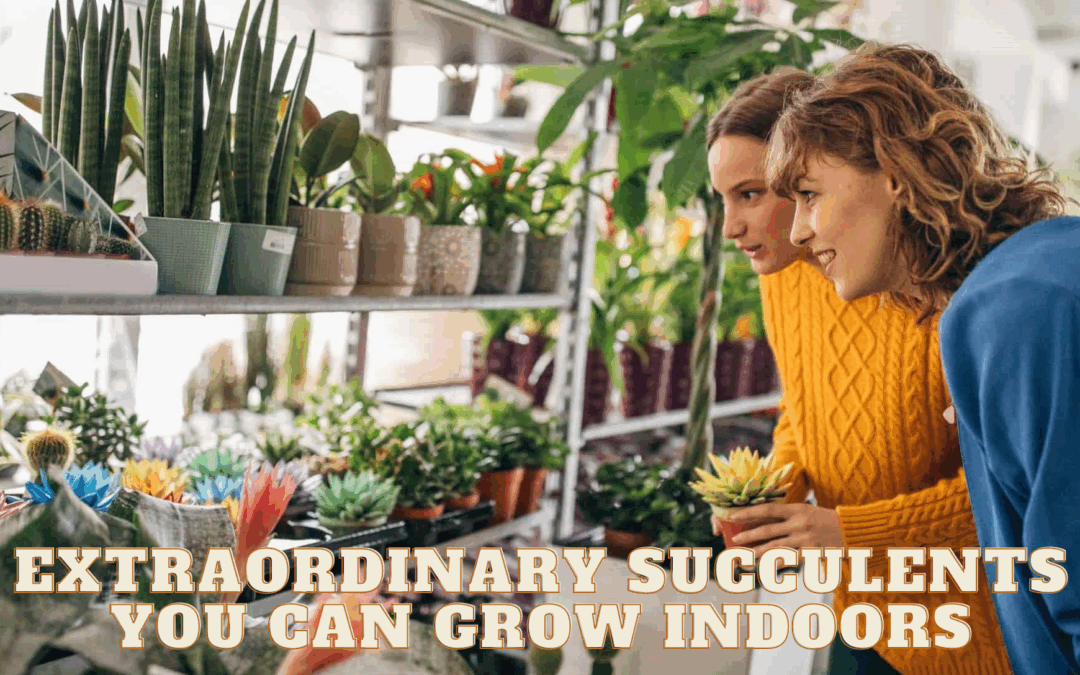
10 Extraordinary Succulents You Can Grow Indoors
by Ken Lain, the Mountain Gardener
Optimism (op·ti·mism): hopefulness and confidence about the future or the successful outcome of something.
A related definition—gardener (gar⋅den⋅er): one who plants seed or young plants; with faith it will grow into something better.
Along with nurturing, gardening and plants naturally require optimism, hope, faith, and belief in their potential. There is something satisfying in the sheer act of gardening. I like to think of Watters Garden Center as a Center for Optimism.
Enough of garden philosophy, let’s talk succulents. The popularity of fascinating succulent plants has exploded this year due to their easy care and diversity. Particular anatomical adaptations and colors make some succulents look as though they belong on another planet rather than on a kitchen counter or windowsill. Here are ten unusual succulents that add personality and distinction to your garden, houseplant collection, a desk at work, or even “on the road” in that new motor home.
Pebbled Tiger Jaws. Faucaria felina is the kind of plant that both attracts and repels the temptation to touch its strangely serrated leaves. In addition to exciting foliage, the plant produces golden-yellow flowers that nearly obscure the plant in fall and winter. Pebbled tiger jaw fills a niche for those who want to grow a succulent in a shady spot.
Crinkle Leaf Plant. Adromischus cristatus feature triangular leaves with lightly ruffled tips. Crinkle leaf tolerates light frost but grows best in a cool sunny spot with infrequent water. On mature plants, red and white flowers peek out from between the two-inch leaves.
Plover Eggs. Adromischus cooperi sports pudgy leaves dotted with purplish speckles. Especially sensitive to frost, this plant is perfect for the indoor winter gardener. The speckles become pronounced in brighter rooms. Plants are easy to propagate by leaf cuttings. Simply twist off a leaf from the stem and insert it into a moist cactus mix. Roots form in four to six weeks.
Mexican Hens and Chicks ‘Topsy Turvy’ encompasses hundreds of rosette-forming succulents native to the Americas south of Arizona. The squared-off leaf tips give this succulent a sea urchin appearance that looks handsome when planted in groups or combined with other succulents in a dish garden.
Baseball Plant. Euphorbia obesa has a plumpness to it that beefs up any container garden. Its spherical shape adds heft and texture to plantings, and it doesn’t bear the spines expected from a cactus-type succulent. Weekly water keeps a baseball plant very happy. Petite flowers that appear on top of the plant let you know the plant is thriving.
Graptoveria ‘Topsy Debbie.’ This plant forms rosette-type foliage spread by offsets. Each readily forms new plants for propagating pleasure. Plants grow best in bright rooms.
Echeveria gibbiflora ‘Barbillion.’ Like the wattle of a turkey, and you instantly visualize this beautifully hideous succulent. They both are carunculated, a term that refers to a bumpy, fleshy growth that is beautifully hideous! Give plenty of light and water sparingly. This unique succulent piques the interest of even the most experienced gardener.
Echeveria’ Blue Curls.’ With its frilly leaves in shades of pink and aqua, a single specimen of this succulent makes an exquisite statement in containers. Prevent water from accumulating within the rosette and remove dead leaves to increase plant vigor.
Aloe hawthoroides. The commonplace aloe is updated with dozens of feathery bristles on each leaf. This highly touchable plant has a moderate growth habit that thrives in any room of your home.
Kalanchoe rhombopilosa. Who can resist a plant called “pies from heaven?” This kalanchoe is but one of the many strange and beautiful living things you’ll find at the garden center. The leaves are fuzzy, gray, and covered with brown streaking. Insignificant yellow flowers appear on stalks in the spring. Kalanchoes prefer growing in rooms with abundant light.
Check out 2023 Succulents and indoor design ideas from Watters Pinterest Board, which includes directions and suggestions for indoor planting and fun with succulents.
Until next week, I’ll be helping gardeners create their own succulent gardens here at Watters Garden Center.
Ken Lain can be found throughout the week at Watters Garden Center, 1815 Iron Springs Road in Prescott, or contacted through his web site at WattersGardenCenter.com or Top10Plants.com.